Why Security Is the Key That Unlocks Enterprise Freelancing
Paul Vallee explains why data enclaves and zero trust architecture remove the #1 barrier to enterprise freelancer adoption -- and why new compliance rules make it urgent
 Tony Buffum
Get this in your inbox every week. Join 26,000+ subscribers.
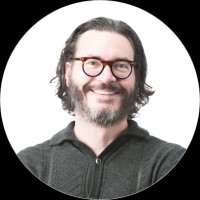
Paul Vallee shares insights on cybersecurity, data enclaves, and zero trust architecture from 25+ years building secure infrastructure for distributed workforces.
Enterprise Security: The Real Ceiling on Freelancer Adoption
Every enterprise wants access to specialized, on-demand talent. And every enterprise security team has the same response: not on our network.
That tension has been the ceiling on flexible workforce adoption for a decade. Not cost. Not talent quality. Not availability. Security. It's the objection that kills deals before they start, and the one that most workforce platforms aren't equipped to answer.
Paul Vallee has spent 25 years dissolving that objection. He founded Pythian in 1997 -- a 550-person remote data platform operations company -- and had a front-row seat to every major governance innovation in data stewardship: GDPR, HIPAA, PCI, CMMC, and more. That experience led him to build Tehama, a platform that creates data enclaves where contractors work inside your perimeter without ever touching your data.
Data Enclaves and the Casino Analogy: How Trust Gets Amplified
The instinct most enterprises have is rational: if the data is sensitive, keep outsiders away from it. But Paul reframes the question entirely. The goal isn't to eliminate trust -- it's to build architecture that amplifies it.
"Whatever amount of cash you can trust them with, having the cameras there lets you trust them with more cash. That exact same dynamic applies to the talent market broadly told." -- Paul Vallee
A data enclave is a cloud-hosted network containing virtual machines governed by what Paul calls "the three onlys": only the data explicitly permitted, only the apps and networks explicitly permitted, and only the people explicitly permitted. Every permission is signed, every session is recorded, and every action generates an immutable audit trail.
The result: freelancers access a virtual desktop controlled by the enterprise. The data never changes custody. The freelancer consumes work through what Paul describes as "very long virtualized monitor-keyboard-mouse cables" -- they do the work, but your data never leaves your perimeter.
CMMC, HIPAA, and the Compliance Forcing Function
New regulations are turning this from a nice-to-have into a legal requirement. The Department of Defense's CMMC rule now requires 200,000 to 400,000 businesses in the defense supply chain to certify against 110 security controls. Not just prime contractors -- the entire nested supply chain, down to a drywall contractor near a base in Germany.
"A CIO who wants to achieve CMMC compliance is thinking, the last thing I want to do right now is throw random freelancers at this problem space. But adopting an enclave is the shortcut to being compliant." -- Paul Vallee
HIPAA is heading the same direction, with a proposed rulemaking that would prescriptively enforce cybersecurity controls with a $2 million fine for negligence. The GSA has adopted similar standards. For enterprises building compliance infrastructure to meet these requirements, there's a powerful byproduct: every technical objection to freelancer engagement disappears.
Why Shipping Laptops Is the Wrong Answer
The traditional alternative -- shipping physical laptops to contractors -- is slower, more expensive, and less secure. Paul walks through the full logistics chain: buy from Dell, ship to IT for imaging, ship to the user, handle breakage and coffee spills, retrieve the laptop when the engagement ends, and then someone gets the unenviable job of cleaning it with Q-tips and alcohol.
"Shipping laptops is slower, it's more expensive, and it's less secure. Your enterprise data estate sprawls when you put it into a freelancer's hands." -- Paul Vallee
Virtual enclaves eliminate that entire chain. Onboarding takes minutes instead of weeks. There's no hardware to procure, image, ship, or recover. And crucially, the enterprise data footprint stays contained -- no data living on someone's personal laptop alongside their teenager's pirated games.
What This Means for the Flexible Workforce
This is where the puzzle comes together. Human Cloud exists at exactly this inflection point: the moment when enterprise-grade security infrastructure and a broad talent ecosystem converge to make the flexible workforce the default choice, not the risky one.
HC's platform aggregates 1,000+ workforce solutions and tracks compliance posture across all of them. Solutions like Tehama handle the secure workspace layer. Together, they represent the full stack an enterprise needs to stop treating freelancers as a workaround and start treating them as a core workforce strategy -- compliant, auditable, fast to deploy, and secure by default.
Paul's parting insight is forward-looking: current cryptographic architecture has less than five years before it needs a quantum-resilient overhaul. The companies investing in this infrastructure now aren't just solving today's compliance checkbox. They're building something durable -- and they'll have an unfair advantage in accessing global talent while competitors are still shipping laptops and hoping for the best.
About Paul Vallee
Paul Vallee is the Founder and CEO of Tehama, a founding member of the Digital Governance Council of Canada, and a senior fellow at the Centre for International Governance Innovation (CIGI), a global top-30 think tank. He previously founded Pythian, a 550-person remote data platform operations company.
Listen to the full episode: Human Cloud Podcast on Spotify
This article was adapted from the Human Cloud Podcast. Subscribe wherever you get your podcasts.
Get insights like this every week
Join 26,000+ leaders staying ahead of the flexible talent market.