
What If Every Agent Is Just a Job Req
Mark Cuban says the biggest opportunity in AI is implementation. He's right, but he's missing the deeper point. The real opportunity is the human layer that makes implementation work.
 Matthew Mottola
Get this in your inbox every week. Join 26,000+ subscribers.
Mark Cuban Is Right. But He Stopped One Layer Short.
Mark Cuban just told Yahoo Finance that the largest wealth transfer opportunity in AI isn't building the tools. It's helping businesses use them. He pointed out that only 18% of U.S. firms had adopted AI by late 2025. That 30 million of America's 33 million companies don't have the expertise to get started. His advice to young people: "Learn all you can about AI, but learn more on how to implement them in companies."
Cuban is right. But I think he stopped one layer short.
The real opportunity isn't implementation. It's the human layer that makes implementation actually work.
The Tool Is Irrelevant
I was on a call this week and said something that surprised even me: "There's the tool and there's the agent. The agent is literally a job req. The tool might just be Claude Code as the interface. But the actual building of the agent, running the agent, iterating the agent? You still need humans for that."
That landed differently than I expected. Because most people are still stuck debating which AI tool to use. Claude vs. ChatGPT vs. Gemini. It's like arguing over Word vs. Google Docs when the real question is: who's writing the strategy?
The tool is the interface. The agent is the work. And the agent, when you really look at it, has all the same components as a job requisition: scope, skills, constraints, deliverables, success criteria. The only difference is that nobody in HR wrote it. Yet.
Scoping Is the Hard Part
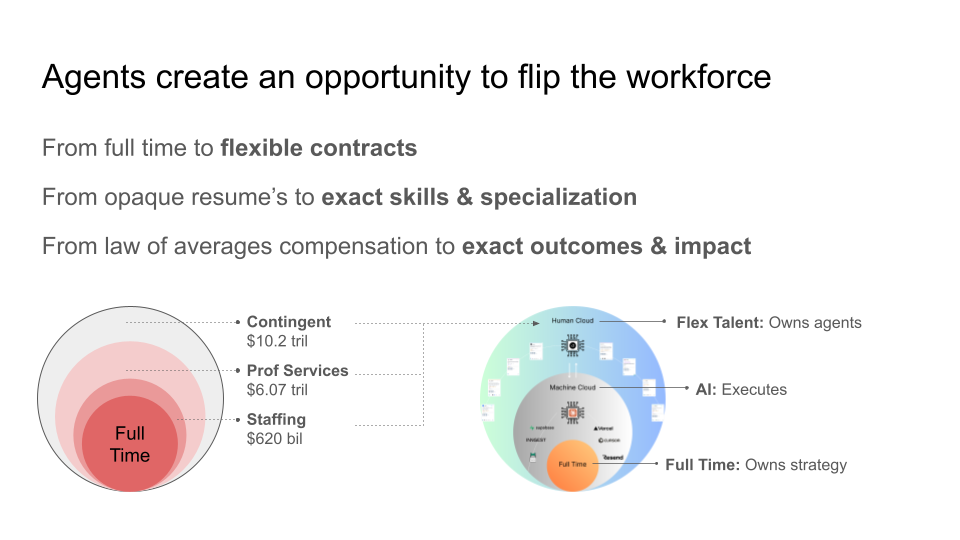
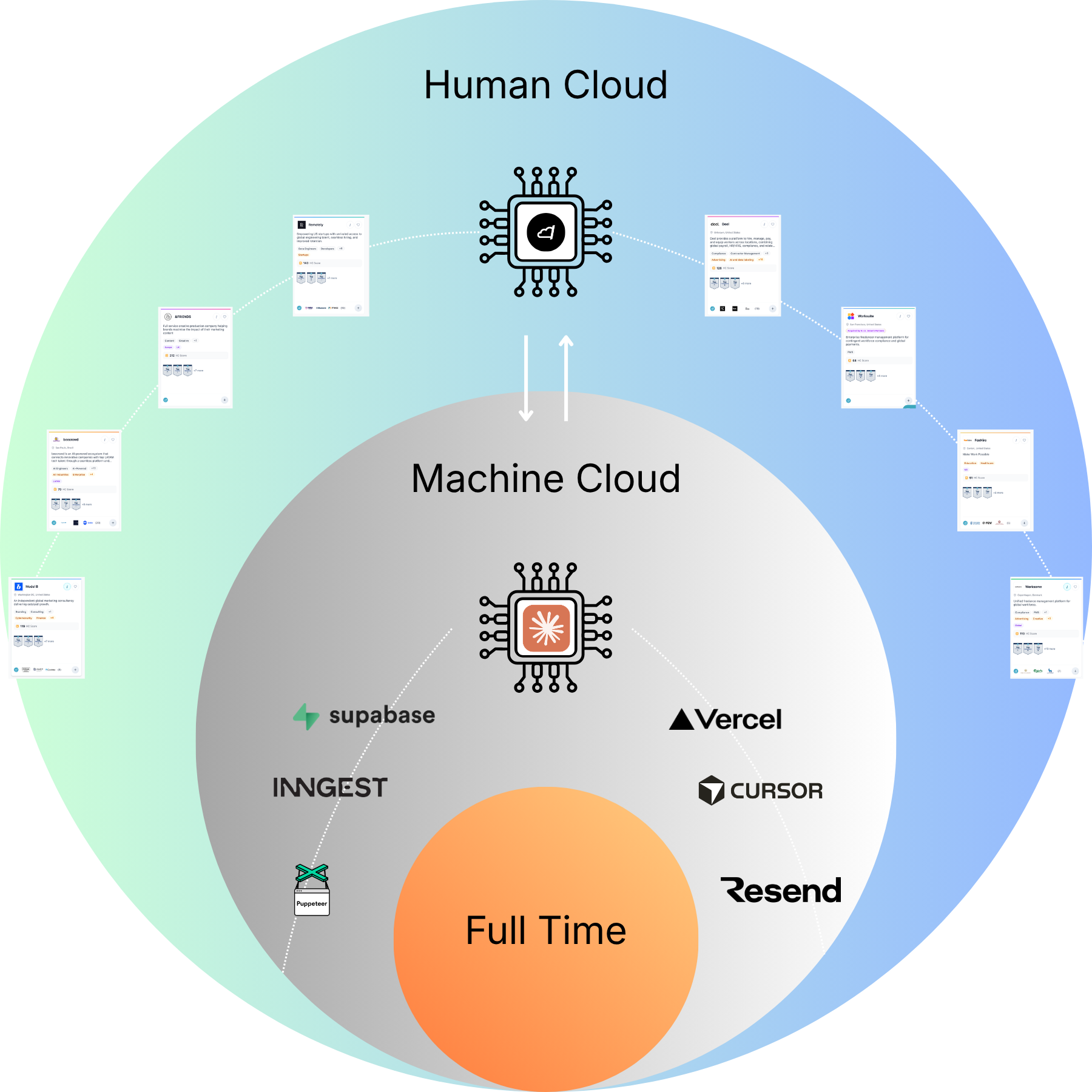
Here's what I keep seeing on the ground. Companies come to us saying they want to "add AI." What they actually need is someone to look at their org chart and ask: which of these roles should be a full-time human, which should be an agent, and which should be an on-demand human who builds and manages agents?
That scoping of work is so damn hard. I don't see a world where companies are always working directly with individuals or tools without a middle layer to help with scoping, managing, and owning that risk.
Cuban compared this moment to when companies told him, "I got this receptionist right there, I'm never going to need that computer." The same denial is happening now, just in reverse. Companies aren't denying they need AI. They're overestimating what the AI can do without a human shaping it.
The New Org Chart
Think about how a company used to staff a marketing campaign. You either hired someone full-time or you went with an agency. Now there's a third option: you spin up an agent. But that agent needs someone to define the brief, choose the right model, build the workflow, QA the output, and iterate when the first version misses.
That "someone" is the new role in every company. Not an AI engineer. Not a prompt engineer. A human who understands the business well enough to scope agents like they'd scope a hire.
Tony, my co-founder, puts it well: AI forces people to not just augment what they're doing but rethink jobs entirely. Break them down. Figure out what you can automate. And when you do that honestly, you realize the door just got wider for specialized, on-demand human talent, not narrower.
I don't think the future is freelance. I don't think it's full-time. I think it's this transition of talent where whatever is left after AI has to be outcome-driven, specialized, and elastic. The world won't be 100% AI. And whatever remains will look nothing like a traditional org chart.
Companies That Treat Agents Like Software Will Fail
Here's the divide I see forming. Some companies will treat agents like software purchases. They'll buy a license, plug it in, and wonder why nothing changed. These are the same companies that bought Salesforce and never configured it.
Other companies will treat agents like hires. They'll scope the role. They'll define what good looks like. They'll put a human in charge of onboarding the agent, managing its output, and iterating when the market shifts. Those companies will win.
My dream is that Human Cloud becomes the API layer for this future. A company tells Claude, "I need to do this." Claude says, "This part's great for me, but you're also going to need a human for this part." And Human Cloud connects them to the right solution for the human part.
The Bottom Line
Cuban is right that 30 million companies need help implementing AI. But implementation isn't a one-time consulting project. It's an ongoing human function. Every agent needs someone to build it, run it, and own the outcome. That's the job. That's the job req. And the companies that figure out how to staff that role, with the right mix of agents and humans, will be the ones that actually capture this wealth transfer Cuban is talking about.
The tool is irrelevant. The human layer is everything.
Ready to build your human layer? Start with the Human Cloud and see the workforce solutions your peers are already shortlisting.
Get insights like this every week
Join 26,000+ leaders staying ahead of the flexible talent market.