
The Jobless Recovery Is Here. What It Means for Your Workforce Strategy.
2025 was revised down by 403,000 jobs. GDP grew but headcount didn't follow. Here's what the data says about where hiring — and flexible talent — is headed.
 The HC Team
Get this in your inbox every week. Join 26,000+ subscribers.
The January jobs report told two stories. On the surface: 130,000 new jobs, 4.3% unemployment. Fine. Unremarkable.
But buried in the revisions was the real headline — 2025 was revised down by 403,000 jobs, bringing the year's total to just 181,000. That's one of the weakest years for job creation outside of a recession.
As our Chief Strategy Officer Tony Buffum breaks down in his analysis, we're in a "jobless recovery." GDP grew, but employment didn't follow. Healthcare and construction carried the weight. Federal government and financial services shed jobs. The gap between economic output and hiring is being filled by automation, AI, and a structural shift toward flexible talent.
This isn't cyclical. It's structural.
Heidrick & Struggles reports that 42% of interim engagements now exceed six months — up from 27% in 2021. Jon Younger, the godfather of the freelance revolution, notes 5.6 million independents now earn over $100K annually — an 87% increase in five years.
The talent pool isn't just growing. It's professionalizing.
For buyers building workforce strategies: the traditional hire-and-hold model isn't just expensive — it's misaligned with how value is being created. Organizations integrating flexible talent as a core capability are the ones positioned to move when the market does.
— Tony, Chief Strategy Officer
Meet the way the world works. Learn more
Featured Insights
Labor Market Reality Check: 2025 in Review
Tony Buffum — Chief Strategy Officer, Human Cloud
2025 revised down to just 181K jobs — one of the weakest years outside a recession. Here's what the data actually tells us about where hiring is headed.
Interim Talent: How Companies Win
Heidrick & Struggles — 2026 Talent Lens Survey
42% of interim engagements now exceed six months. The talent pool isn't just growing — it's professionalizing. 5.6M independents earn $100K+.
The Godfather of the Freelancing Revolution
Jon Younger — Principal, Agile Talent Collaborative
From 800 platforms in 2020 to a global phenomenon. Why the freelance revolution isn't slowing down — and what it means for enterprise workforce strategy.
Upcoming Events

Exclusive Exec Dinner in Nashville — This Wednesday
Tony is hosting an intimate dinner with 15+ CHROs, Heads of Talent, and Business Founders focused on the intersection of talent and tech — and how to optimize it in 2026. 1 sponsorship available.
HC Monthly: February Edition
Meet fellow flexible talent Executives, Entrepreneurs, and Experts, along with 2-5 industry experts across technology, policy, M&A, and more. Exclusive to HC Membership.
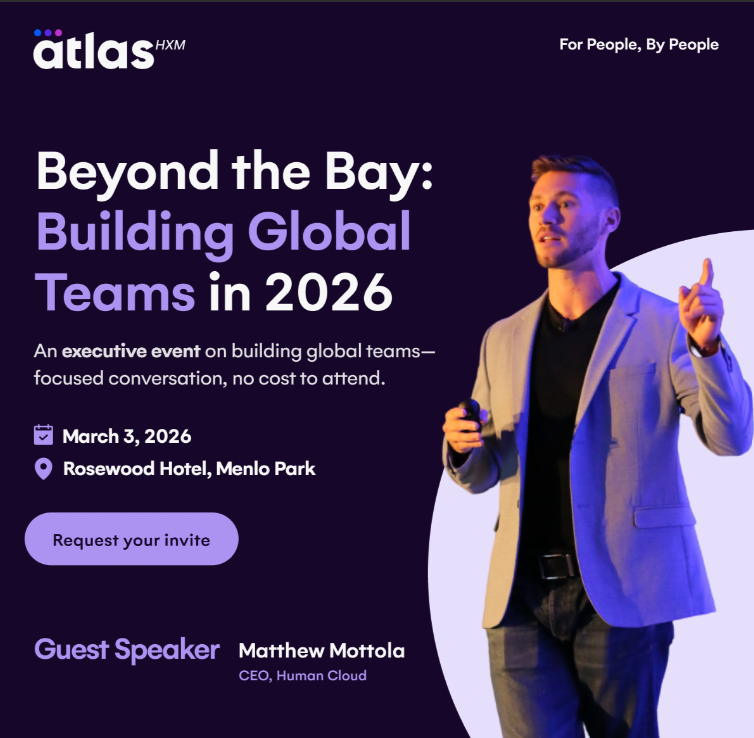
Matthew Keynoting at the Rosewood — March 2
Join top Talent & Tech Executives at this Silicon Valley landmark for a discussion on the future of global teams. Only 5 seats available.
Platform Pulse — Week of Feb 16, 2026
16x growth over four months
From 165 monthly visitors in October to 2,719 in January. February is already at 964 visitors halfway through the month.
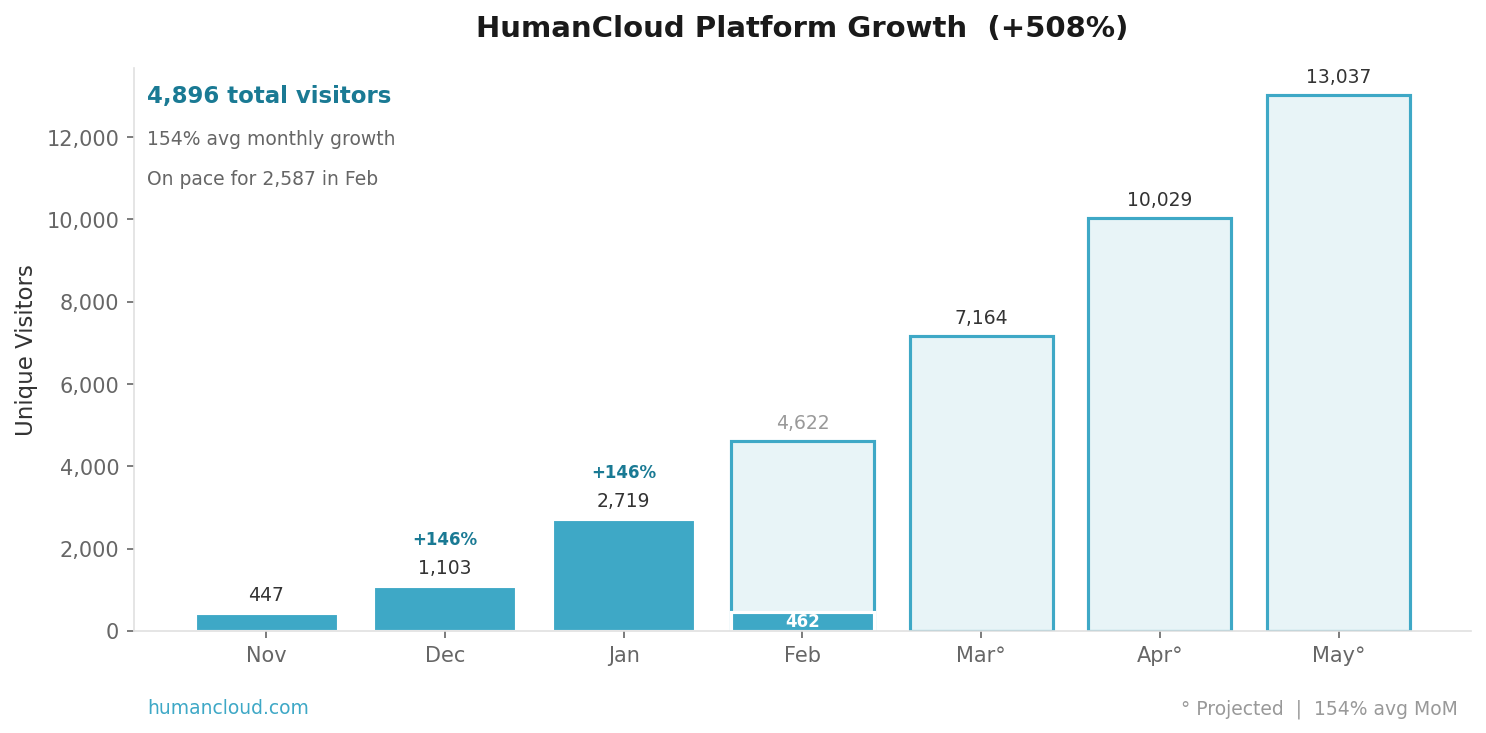
Beyond the growth, here's what the data is showing:
- Sustained momentum: The trajectory from 165 → 447 → 1,103 → 2,719 visitors represents consistent month-over-month growth. More buyers are actively evaluating flexible talent solutions.
- Category momentum: EOR demand is up 167% QoQ, Marketing 150%, and Developers 100%. Fractional work is emerging as a rising interest area — timely given the shift toward task-level workforce planning.
- Research depth: Visitors averaged 2.0 pages per session with 83% US traffic. Brazil (3.5%) and Canada (1.9%) are the fastest-growing international markets.
Where Demand Is Flowing
Top-rated solutions by HC Score in the fastest-growing categories:
EOR (↑167% QoQ)
- Emerald Technology — Handles everything from contracts to payroll across 160+ countries — a one-stop shop for companies hiring globally without setting up local entities
- MBO Partners — The go-to platform for Fortune 500s managing large independent contractor populations with compliance built in
- FoxHire — Straightforward EOR for companies who just need someone to own the employment relationship without the complexity
Marketing (↑150% QoQ)
- Model B — An independent global marketing consultancy delivering outsized growth with the strategic depth of a big firm and the speed of a startup
- Wripple — Marketing's on-demand talent platform — spin up specialists for campaigns and scale back when you're done
- Richmond Concept — Blends creative talent with AI and machine learning expertise for brands pushing into next-gen marketing
Developers (↑100% QoQ)
- Remotely — Helps startups tap into global engineering talent with seamless hiring and improved retention — no foreign entities needed
- Supportwave — The tech skills you need, when you need them — senior developers embedded in your team within days
- beecrowd — AI-powered ecosystem matching you with pre-vetted tech talent who've already proven themselves in coding challenges
This Week on The Human Cloud Podcast
From Allegis Global Solutions to Growth Capital: Why Enterprises Need a Chief Work Officer
Bruce Morton, Co-Founder of Growth Capital
After 45 years in workforce management and a career that included building Allegis Global Solutions, Bruce just launched Growth Capital — a consulting firm born over Super Bowl weekend. His thesis: enterprises need a Chief Work Officer, not just a CHRO.
"If you haven't deconstructed the work, you're mismatching when you hire on skills. You need to start with the work, not the talent."
Industry Intel
AI reshapes HR operating models, the contingent market swells to half a trillion, and gig workers gain new legal protections.
1. Contingent Workforce Market on Track to Hit $493 Billion by 2033
GlobeNewswire / Astute Analytica
From $189.5 billion in 2024 to nearly $493 billion by 2033 — an 11.2% CAGR. The market is being propelled by AI-driven talent models and a shift from reactive program management to predictive workforce decision-making. For enterprise buyers, this validates what you're already seeing: contingent workforce isn't a line item anymore. It's the operating model.
2. AI 'Superagents' to Drive the Largest HR Transformation in Decades
Josh Bersin's latest research predicts AI agents will orchestrate end-to-end HR workflows. Core HR headcount could fall 30% as AI assistants handle sourcing, screening, and compliance at scale. The implication: 500-person teams become 50-person teams augmented by AI. The talent you need changes faster than your org chart.
3. Two-Thirds of TA Leaders Increasing Tech Spend in 2026
More than half of TA leaders are specifically allocating budget toward new recruiting platforms. After $4.93 billion poured into HR tech through Q3 2025 (20% YoY increase), the money is following the mandate. The question: are you investing in platforms that consolidate your talent supply chain, or adding more point solutions?
4. California Gig Workers Can Now Unionize Under New 2026 Law
AB 1340 took effect January 1st, allowing certain independent contractors to collectively organize — a first in the US. Meanwhile, India's gig workforce is set to pass 10 million this year. For buyers managing cross-border contingent programs, this is another reason to partner with solutions that have compliance built in.
5. EOR Market Expected to Nearly Double to $15.9 Billion by 2035
GlobeNewswire / Custom Market Insights
The EOR market is growing at 9.24% CAGR with a shift toward providers with direct, in-country employment accountability. 86% of HR leaders cite compliance with international labor laws as their top challenge. If your EOR relies on partner networks rather than owned entities, expect harder questions from legal.
Get insights like this every week
Join 26,000+ leaders staying ahead of the flexible talent market.