Why Data Centers Need 400 Engineers a Day
Brett Riley explains how ITARMI deploys 4,000 engineers across 170 countries for data center builds as hardware refresh cycles compress to 18 months
 Matthew MottolaJuly 21, 2026
Get this in your inbox every week. Join 26,000+ subscribers.
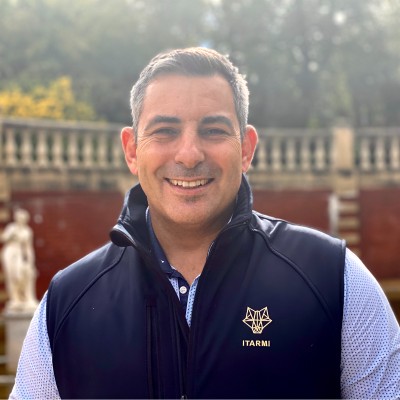
Brett Riley shares insights on scaling a global IT workforce from his nine years building ITARMI across 170 countries.
Data Center IT Talent: Why Hardware Refresh Cycles Just Got Twice as Fast
Everyone is talking about AI replacing jobs. Brett Riley sees the opposite happening in physical IT infrastructure.
His company, ITARMI, deploys 4,000 engineers across 170 countries. Their primary work right now: building and maintaining data centers that are literally the size of eight or nine football fields. One project in Malaysia requires 400 engineers on site per day, running 24/7 shifts with roughly 1,200 engineers rotating through daily.
The hardware refresh cycle that used to run on a three-to-five-year cadence has compressed to 18 months. More data means more GPUs, which means more fiber, more network switches, and more physical infrastructure. That means the same engineers are cycling through more frequently, creating sustained and accelerating demand for physical IT talent.
"Anything that is admin oriented is under threat from AI. What's not under threat is the physical installation. Cabling, racking and stacking, setting up a laptop. Those sorts of things are not under threat."
This is the paradox of AI: the technology creating the most disruption in white-collar work is simultaneously generating massive demand for blue-collar IT talent. The companies that figure out how to access this talent at scale will win the infrastructure race. The ones still trying to hire full-time teams will be months behind.
Global IT Workforce: Why Your Moat Is People, Not Software
Brett built ITARMI on an insight he had during a cab ride leaving BlackRock's New York office. If Uber can match drivers to riders anywhere in the world, why not do the same for IT engineers?
He was working at CDW, one of the largest IT value-added resellers in the world, and watched them consistently fail to deliver in certain locations. Not because the work was too complex. Because they did not have the people or the model.
Nine years and 180,000 engineering visits later, Brett has a counterintuitive take on defensibility: the platform is not the moat.
"Our moat is our people. It's not the platform. Platform is great, but you can build platforms. Go onboard 4,000 engineers. Go through the due diligence, the background checks, the validation, the delivery of culture. That'll take you years and years."
This mirrors what we see at Human Cloud across the broader flexible workforce market. The platforms that win are not the ones with the best interface. They are the ones with the deepest, most verified talent networks. Discovery, compliance, and quality verification are the hard problems. The software is table stakes.
Freelancer Orchestration Platform: From Trust Problem to Systems Problem
One of the most striking data points Brett shared: when he started ITARMI, half of all client conversations centered on whether they could trust freelancers. Today, that objection comes up roughly once every four months.
"When I started this business, one in every two conversations was about trusting a freelancer. I have had one in four months now."
That shift did not happen because attitudes magically changed. It happened because ITARMI built the systems that make trust measurable: geofencing to verify location, digital sign-offs to prove work completion, facial recognition for compliance, and outcome tracking with 99%+ SLA delivery across 170 countries.
Brett made another point that reframes the entire employer surveillance debate. If a traditional employer tried to roll out geofencing and facial recognition on their workforce, the backlash would be immediate. But independent engineers opt into these systems voluntarily because the data protects them.
"If he doesn't deliver on outcome, he doesn't get the next job. There's much more at stake than being in a job."
When escalations happen, Brett says nine out of ten times the data shows the issue was not the engineer. It was bad communication or misaligned scope. The platform gives the talent ammunition to defend themselves.
Physical IT Infrastructure: Why AI Made Brett's Roadmap Longer, Not Shorter
Many SaaS founders panicked when AI arrived. Brett got excited. Not because AI threatens his business, but because it extended his product roadmap by a decade.
ITARMI has been "dogfooding" their own platform for seven years, testing APIs into ServiceNow and other enterprise tools. Now AI gives them the ability to build their own MCP server so customers can query talent data through any AI tool. A client can ask: what does this team look like for a data center build in Malaysia? And get back 30 engineers, level-one cablers, with specific scope history and delivery records.
"AI has given me 10 years of roadmap. Everything is possible. Even the ability to monetize our data from an access perspective."
Brett's point validates a broader trend we are tracking at Human Cloud: the most valuable workforce platforms are the ones sitting on years of structured delivery data. The interface layer is being commoditized by AI. The data layer, the verified talent networks, the compliance infrastructure built over years of actual deployments, that is what cannot be replicated.
The Bottom Line
The global data center buildout is creating one of the largest sustained demand cycles for IT infrastructure talent in a generation. Companies that access this talent through orchestration platforms like ITARMI will move faster and maintain quality. Companies that try to build internal teams or manage individual freelancers directly will accumulate tech debt and miss deadlines.
Brett's story is proof that the flexible workforce model works at the highest stakes: enterprise data centers, cybersecurity interventions, and infrastructure serving the world's biggest brands. The question is no longer whether to use flexible IT talent. It is whether you have the platform infrastructure to deploy it reliably.
About Brett Riley
Brett Riley is the founder of ITARMI, a global workforce orchestration platform that has completed 180,000+ engineering visits across 170 countries, serving brands like Amazon, Nike, Louis Vuitton, and major banking institutions.
Listen to the full episode: Human Cloud Podcast on Spotify
This article was adapted from the Human Cloud Podcast. Subscribe wherever you get your podcasts.
Get insights like this every week
Join 26,000+ leaders staying ahead of the flexible talent market.